Borate Wood Preservation
Borate Treatment for Log Homes & Exterior Wood
Borate treatment is available for bare log, timber, and cabin exterior wood during repair, restoration, finish removal, or before staining.
Request a quote for borate wood preservation in East Tennessee or Western North Carolina.
Contact UsRequest a QuoteWhen Borate Treatment Makes Sense
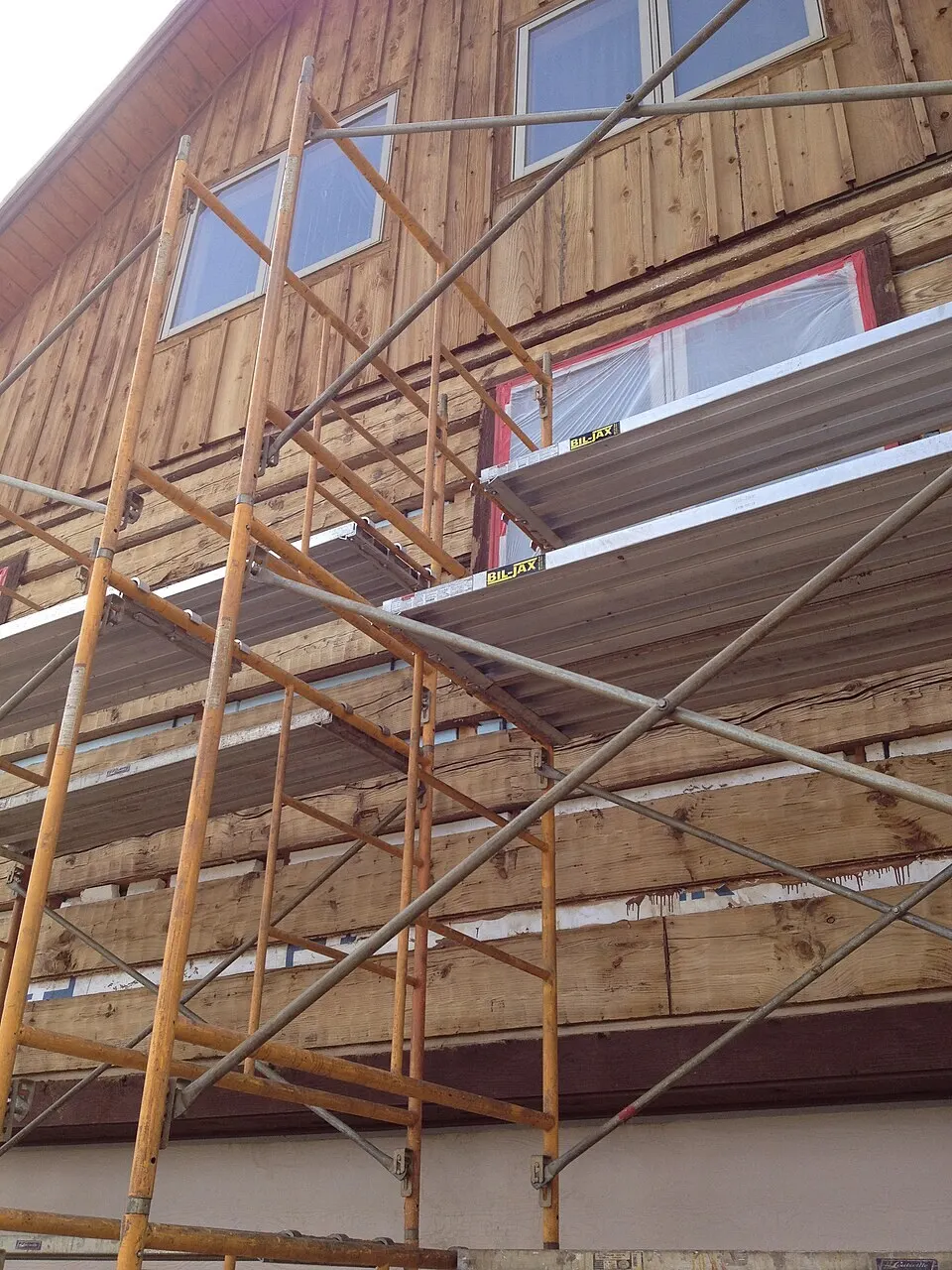
Borate treatment is most useful when logs or exterior wood are bare, exposed, newly repaired, blasted, sanded, or otherwise ready to absorb a preservative. Common use cases include repaired log sections, bare lower courses, log ends, checks, corners, post bases, and restoration areas where old coatings have been removed.
What It Can Help Protect Against
Borate wood preservatives are used to help protect wood from decay fungi and some wood-ingesting insects. TimberGuard uses careful preservation language: active infestations, termite treatment, wood-destroying insect inspections, and pesticide applications requiring a licensed applicator may require a licensed pest-control professional.
Bare Wood and Timing Matter
Borate isn't a magic additive that can be sprayed over any cabin surface. Existing stain, sealer, water repellent, paint, or heavy mill glaze can block absorption. The wood should be clean and dry, treatment must be allowed to absorb and dry, and the next finish system must be coordinated.
High-Risk Areas We Look For
TimberGuard checks lower log courses near splashback, log ends and corners, upward-facing checks, window and door trim, porch posts, deck connections, areas below roof runoff, shaded walls, and recently repaired or replaced logs.
One Part of a Preservation System
Borate can help protect vulnerable wood, but it doesn't replace repair, drainage correction, stain, sealant, or maintenance. A practical sequence is to identify the moisture source, remove failed finish where needed, repair compromised wood, apply treatment where appropriate, allow drying, then apply compatible stain, sealer, chinking, or caulk.
Claim Boundaries Matter
TimberGuard may include wood-preservation treatment in a repair, restoration, or surface-preparation scope where appropriate. Structural pest-control claims, active infestation treatment, or regulated pesticide services should be handled by the appropriate qualified professional.
What affects the quote
Service details depend on the cabin condition.
Cabin exterior work is affected by moisture, sun exposure, product compatibility, access, drying time, and the condition of nearby wood. Before recommending borate wood preservation, TimberGuard looks for the surrounding conditions that could make the same problem return.
Helpful details include which wall is failing, whether damage is near a deck or roofline, and whether the finish is failing locally or across the whole structure.
- Where water is coming from and where it drains after storms
- Whether the affected wood is soft, stained, cracked, loose, or only weathered
- How the existing finish behaves around checks, joints, decks, and sun-facing walls
- Whether chinking, caulk, trim, gutters, or deck connections are part of the failure
- What can be handled now versus what belongs in maintenance or a larger restoration
Common questions
Clear answers before you commit to the work.
Can borate be applied over existing stain?
Usually no. Borate treatment needs to absorb into bare, clean wood. Existing stain, sealer, paint, or water repellent can block penetration and leave the wood unprotected beneath the coating.
Does borate treatment stop carpenter bees?
No. Borate products are generally aimed at decay fungi and wood-ingesting insects. Carpenter bee activity may need separate prevention, repair, or pest-control review.
Is borate treatment enough by itself?
No. Borate treatment is only one part of a preservation plan. The wood still needs proper repair, drying, compatible stain or sealer, sealed checks or joints where appropriate, water-management fixes, and ongoing maintenance.
Start with what you can see.
Soft logs, peeling stain, open chinking, dark spots, or weathered deck boards are enough to begin. Request a quote and we will follow up about a site visit.
Related exterior wood services
Many cabin projects combine repair, surface work, staining, chinking, washing, cabin deck repair, or maintenance.